Originally posted on GetWork.com.
We’re on our way to another a historic election.
In 2020, about two-thirds of the voting-eligible population voted, the highest for any national election since 1900. Impressive, considering this country’s less-than-stellar record on voter turnout.
There has long been a call to make election day a national holiday to improve turnout. Several states and cities have made election day a civic holiday already including Delaware, Hawaii, Virginia, Kentucky, and New York, but whether an employee is entitled to paid time off depends on the location.
Most states at the very least require employers to allow time off for their workers to vote, however, again that time off is not guaranteed to be paid. Though there is bipartisan support for making election day a national holiday (in a moment of agreement between the parties, a 2018 survey found support from a majority of Democrats and Republicans), congressional efforts to codify it have faltered and no federal bills creating a holiday have yet passed into law.
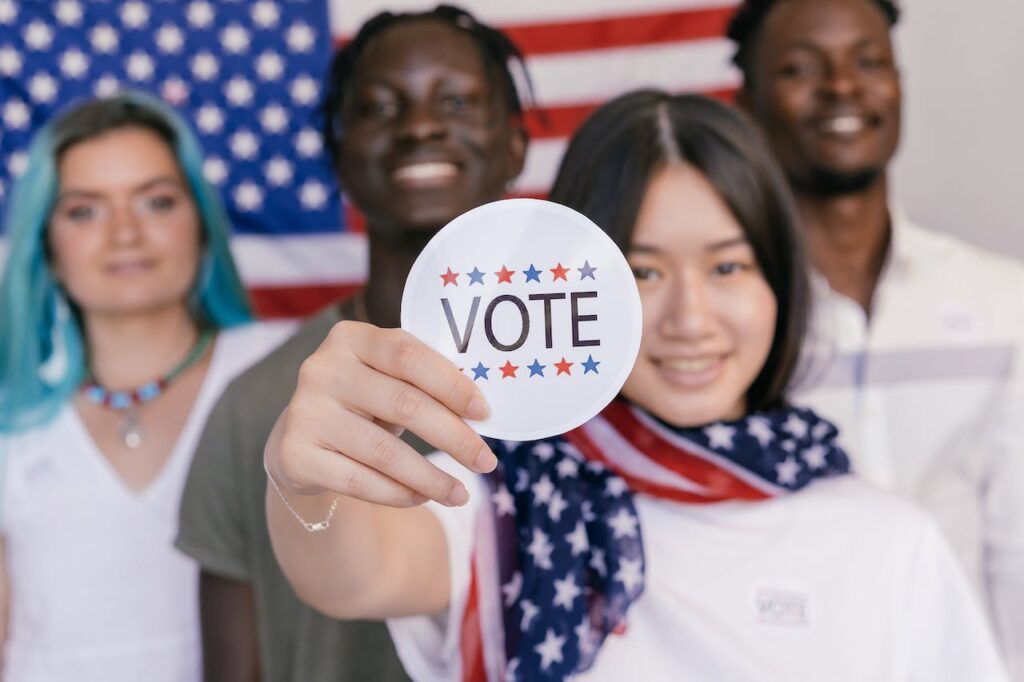
In the absence of federal action, corporate America has stepped up in a big way. The “Time to Vote” campaign launched in 2020 as a nonpartisan movement that encouraged companies to make public commitments to give their employees time off to vote. By the 2020 election, over 2000 companies had joined the movement including Bank of America, Starbucks, Best Buy, Gap Inc, J Crew Group, JPMorgan Chase, Lyft, Nike, Twitter, and Visa. The campaign is still live, with many more companies expected to join the movement ahead of this year’s election.
There are a host of reasons why allowing employees paid time off to vote is good policy. Excessive wait times at polling places disproportionately impact people of color. In a 2019 study that analyzed voting wait times during the 2016 presidential election, it was found that polling places where the vast majority of registered voters are Black experience 29% longer wait times than white-majority polling places. Additionally, it found Black Americans were about 74% more likely than their white counterparts to wait more than 30 minutes to vote.
Many argue that election day should be a celebration and not a chore. In Australia where voting is mandatory, elections are celebrated with nationwide parties, resulting in turnout rates of around 90%.
It can also encourage people to become more involved with the process. Even if employees need only a small amount of the allotted time to cast their vote, or if they voted early or by mail, they can use the time to drive people to the polls or even volunteer as election judges.
Only time will tell if this year sees a record turnout of voting, and whether corporate America holds the key to a successful election.
 Read more: How much are world leaders paid?