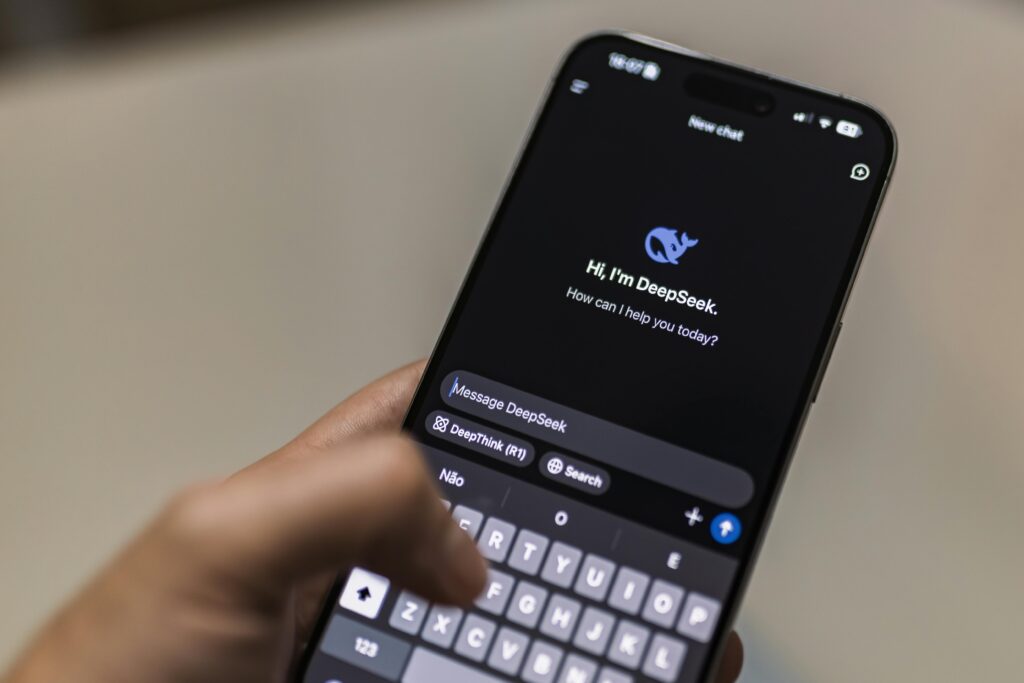
DeepSeek’s emergence in the AI landscape is a game-changer that demands our attention. This Chinese startup, barely two years old, has sent shockwaves through the tech world with its latest AI model, setting new benchmarks in performance and efficiency.
The DeepSeek breakthrough
DeepSeek’s latest model has achieved performance levels comparable to top-tier models from industry giants like Anthropic and OpenAI, particularly in math, coding, and reasoning tasks. What’s truly remarkable is that they’ve accomplished this at a fraction of the cost – operating and training at approximately 95% lower costs than traditional alternatives.
Armen Berjikly, chief technology officer at BetterUp, explains that DeepSeek’s success stems from “clever engineering solutions that reduced expensive memory usage with minimal impact on performance“. These innovations include:
- Multiple-token prediction for faster response generation
- Activating specific parts of the model for specialized tasks
- Using 8-bit precision instead of 32-bit for training
- Employing reinforcement learning without human fine-tuning
Implications for HR and talent acquisition
As HR professionals, we must consider how this leap in AI technology could transform our field. Here are some ways where HR can tap into AI:
- Faster hiring: AI-driven candidate screening and matching
- Enhanced employee engagement: Real-time feedback and sentiment analysis
- Data-driven decision making: Predictive analytics for strategic workforce planning
- Streamlined onboarding: Automated, personalized onboarding experiences
- Tailored training and development: AI-curated learning paths for employees
- Improved wellbeing Initiatives: Proactive identification of employee needs

The global impact
DeepSeek’s emergence has indeed sent ripples through the global tech landscape, challenging the status quo of AI development and market dominance. The impact extends far beyond HR, affecting various sectors and reshaping the competitive landscape of AI technology.
J.P. Morgan Wealth Management’s assessment of “markets adjusting to a new threat” is evident in the market’s reaction. Nvidia stock tumbled -17% in one day after the Deepseek announcement. Meanwhile, the NASDAQ fell 3% and the S&P 500 dropped 1.5% in response to DeepSeek’s breakthrough. This market volatility underscores the significant disruption caused by DeepSeek’s innovation.
For HR professionals, this increased competition and innovation in the AI space could lead to more accessible and cost-effective AI tools. As the technology becomes more widely available, HR departments may benefit from advanced AI capabilities without the need for massive investments, potentially leveling the playing field between large corporations and smaller businesses in terms of HR technology adoption.
Furthermore, DeepSeek’s open-source approach contrasts sharply with the closed models of many US tech giants, potentially accelerating global AI innovation. This could lead to a more diverse ecosystem of AI tools and applications, offering HR professionals a wider range of specialized solutions to address specific needs in talent acquisition, employee engagement, and workforce management.
The potential security concerns
Recent investigations have revealed a host of security and privacy concerns surrounding DeepSeek, sending shockwaves through the tech industry and raising red flags for organizations and HR professionals alike. At the heart of these concerns is the discovery of hidden code within DeepSeek that covertly transmits user data to servers associated with Chinese state-controlled entities, potentially compromising sensitive information.
Security experts have identified several critical vulnerabilities in DeepSeek’s infrastructure. The use of outdated cryptographic algorithms and hardcoded encryption keys leaves user data exposed to potential breaches. Additionally, SQL injection vulnerabilities could allow malicious actors to manipulate DeepSeek’s database, potentially gaining unauthorized access to user records.
The AI model’s security measures have also come under scrutiny. In recent tests, DeepSeek’s AI failed to withstand more than half of the jailbreak attempts, indicating inadequate safeguards against misuse. This weakness is particularly concerning given the extensive data collection practices of the app, which gathers user inputs, keystroke patterns, and device data, raising fears about potential behavioral profiling.
Further compounding these issues, researchers uncovered a publicly accessible database linked to DeepSeek containing a trove of sensitive information, including chat histories, backend data, and operational details. This exposure not only highlights the inadequate security measures in place but also underscores the potential risks to user privacy and corporate confidentiality.

What should HR do?
In light of the security concerns surrounding AI tools like DeepSeek, HR departments must take a proactive stance in developing and implementing robust cybersecurity and AI policies. This isn’t just about protecting data; it’s about safeguarding the entire organization and its employees in an increasingly AI-driven workplace.
At the core of this initiative should be the establishment of clear AI usage guidelines. These guidelines need to define which AI tools are permitted within the organization and outline responsible use practices. However, creating effective policies isn’t a task for HR alone. It requires a collaborative effort, ideally through the formation of an AI task force that brings together representatives from HR, IT, Legal, and other relevant departments.
Given the rapid pace of AI advancement, these policies can’t be static documents. They need to evolve alongside technology. Implementing regular policy updates, preferably on an annual basis, ensures that the organization stays ahead of emerging threats and capitalizes on new opportunities.
Data protection should be at the forefront of these policies. This means implementing strict security protocols for AI systems that handle employee data, including robust encryption and stringent access controls. But even the best policies are ineffective if employees aren’t aware of them or don’t understand their importance. That’s why ongoing training on AI best practices and potential risks is crucial.
Regular security audits of AI tools and platforms should be conducted to identify and address potential vulnerabilities before they can be exploited. Finally, it’s essential to ensure that all AI policies align with existing data protection regulations such as GDPR and CCPA.
 Read more: How social networks facilitate recruitment